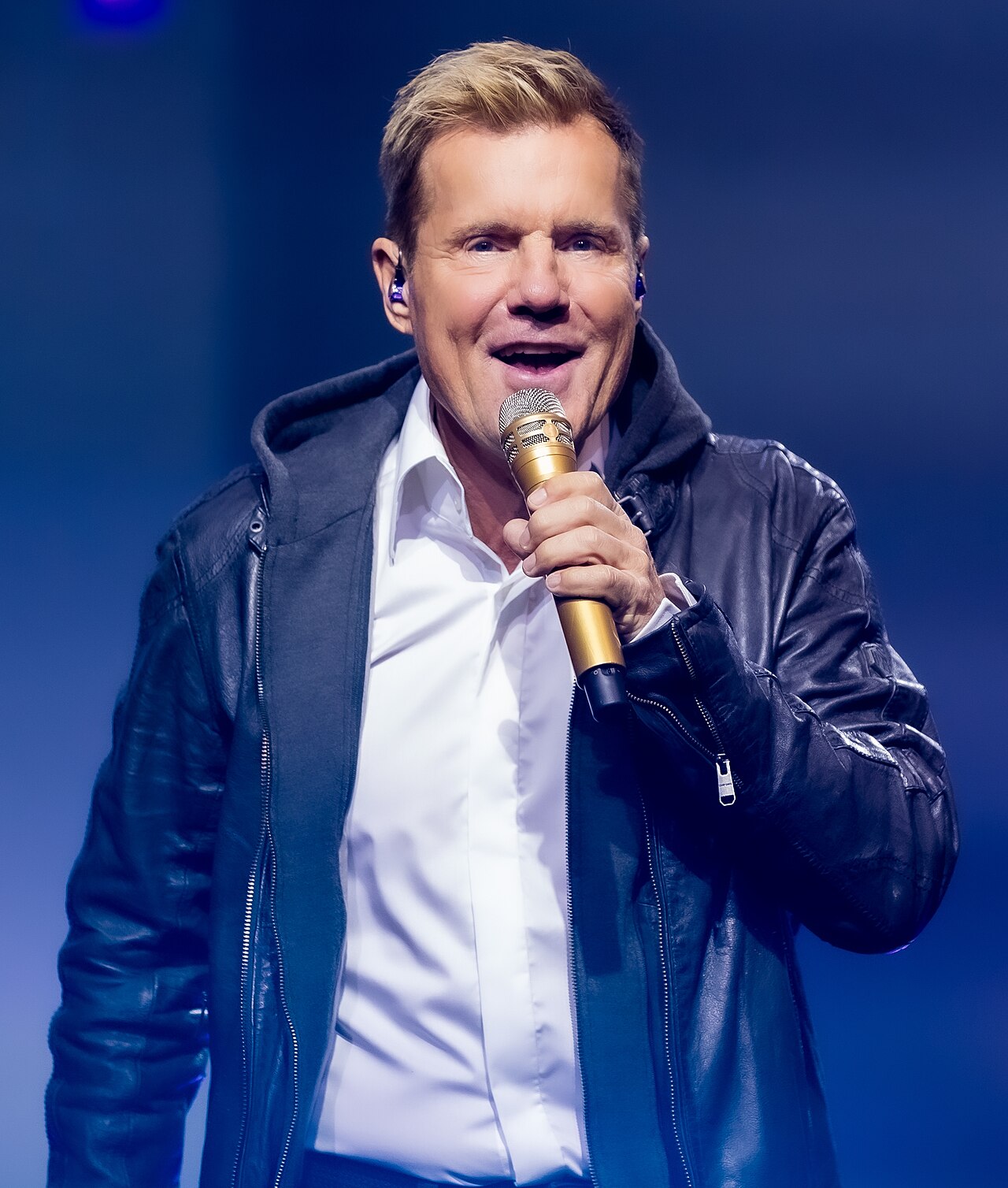
Wann Wurde Dieter Bohlen Geboren? Unraveling the Iconic Producer's Origins
The name Dieter Bohlen is synonymous with German music, pop culture, and television entertainment. As the creative force behind global phenomena like Modern Talking and the discerning, often sharp-tongued judge on shows like "Deutschland sucht den Superstar" (DSDS) and "Das Supertalent," Bohlen has carved an indelible niche in the entertainment industry. But before the sold-out stadiums, chart-topping hits, and prime-time TV appearances, there was a beginning – a precise date, a specific place, and a set of formative experiences that laid the groundwork for his extraordinary career. So, for those asking, "Wann wurde Dieter Bohlen geboren?" the answer is clear:
Dieter Günter Bohlen was born on February 7, 1954.
His birthplace was Berne, a charming municipality nestled in Niedersachsen, Germany. This winter birthday, falling on a Sunday, marked the arrival of a future superstar into a world undergoing significant post-war transformation. As of 2024, Bohlen celebrated his 70th birthday, a testament to his enduring presence and influence over several decades. Born under the Western zodiac sign of Aquarius, known for its independent and innovative spirit, and in the Chinese zodiac year of the Wood Horse, symbolizing energy and a love for freedom, these astrological traits seem to remarkably mirror the dynamic and unyielding personality that would define his public persona. His parents, Hans and Edith Bohlen, would witness their son navigate a path from a conventional upbringing to an unconventional and dazzling career.
A Glimpse into Germany in 1954: The World Dieter Bohlen Entered
To truly understand Dieter Bohlen's early life, one must appreciate the socio-historical context of Germany in the mid-1950s. The nation was still deeply entrenched in the aftermath of World War II, grappling with its division into East and West, yet simultaneously witnessing the nascent stages of its "Wirtschaftswunder" – an economic miracle of reconstruction and rapid growth. This era was characterized by a yearning for stability, progress, and a return to normalcy.
Dieter Bohlen’s generation, including contemporaries like former Chancellor Angela Merkel (born 1954) and President Frank-Walter Steinmeier (born 1956), grew up during this period of immense change and rebuilding. Their childhoods in the 1950s and youth in the 1960s were shaped by a blend of traditional values and the emerging influences of global culture. Interestingly, on the exact day of Dieter Bohlen's birth in 1954, the German single charts were topped by "Anneliese" by Hans-Arno Simon, a lighthearted Schlager tune that offered a brief escape from the gravity of the times. For more fascinating details about the music scene and historical context surrounding his birth, you might be interested in reading
Dieter Bohlen's Birthday 1954: Germany's Top Song & Roots. This backdrop provided the initial canvas for Bohlen's journey, a time of redefinition that would subtly influence his drive and eventual impact on German culture.
Formative Years: Childhood, Regional Roots, and Early Influences
Dieter Bohlen's early life was rooted in the tranquil landscapes of northern Germany. He spent his early childhood growing up in Ostfriesland, a region known for its flat, green plains, windmills, and a strong sense of community. Here, in a rural setting, he lived with his parents, Hans and Edith Bohlen, and his grandmother, often on a farm. This bucolic upbringing, far removed from the glitz and glamour he would later embrace, likely instilled in him a grounded perspective and a certain practicality that many fans associate with his straightforward, no-nonsense personality.
Later, the family relocated to Eversen, a district within the city of Oldenburg. This move would have exposed a young Bohlen to a slightly more urban environment, broadening his horizons beyond the purely rural setting of his earliest years. It was during these formative years that his latent interest in music began to surface. While specific details of his earliest musical explorations are not extensively documented from this period, it is clear that the seeds of a lifelong passion were being sown. The simple, everyday experiences of childhood in post-war Germany, coupled with the stability of a family home, provided a sturdy foundation for the audacious dreams that would soon take hold.
The Path Less Taken: Education, Parental Wishes, and Political Explorations
While Dieter Bohlen is celebrated for his musical prowess, his initial academic and professional trajectory was markedly different, largely influenced by his parents' aspirations. He successfully completed his Abitur – the German equivalent of a high school diploma qualifying for university – at the Wirtschaftsgymnasium (commercial high school) of the Berufsbildende Schulen in Oldenburg-Haarentor. This particular schooling focused on economics and business, providing him with a strong foundation in commercial subjects.
Following his Abitur, Bohlen moved to Rosdorf and enrolled at the Georg-August-Universität in Göttingen, where he pursued a degree in Business Administration (Betriebswirtschaftslehre). This academic path was, by his own admission, largely pursued at the express wish of his parents. Like many parents of his generation, Hans and Edith Bohlen likely desired a secure, respectable career for their son, seeing business as a stable alternative to the unpredictable world of arts. In 1978, Dieter Bohlen successfully concluded his studies, earning the title of Diplom-Kaufmann (graduate in business administration), a qualification that undoubtedly pleased his parents.
This period of academic rigor and structured learning stands in fascinating contrast to his burgeoning artistic ambitions. It highlights a common struggle for many creative individuals: balancing parental expectations for a conventional career with an undeniable inner calling for artistic expression. However, it's plausible that the discipline and strategic thinking acquired during his business studies would later prove invaluable in managing his own highly successful music career and various ventures. Interestingly, during his youth, Bohlen also explored political ideologies, briefly becoming a member of the Sozialistische Deutsche Arbeiterjugend (SDAJ) and the Deutsche Kommunistische Partei (DKP). This period of early political engagement adds another layer to the complex tapestry of his formative years, showcasing a curious and engaged mind. To delve deeper into these aspects of his early life, including his education and political affiliations, consider reading
Dieter Bohlen: 1954 Birth, Education, and Early Political Ties.
The Seeds of Stardom: Early Musical Ventures and Professional Beginnings
Despite his academic pursuits in business, Dieter Bohlen’s passion for music was an undeniable force that simmered throughout his school and university years. Even while immersed in textbooks and economic theories, he dedicated significant effort to producing music, honing his skills as a composer and arranger. This early, diligent work ethic foreshadowed the prolific output that would later characterize his career.
The pivotal moment that truly launched his professional journey came after completing his studies. Bohlen made the strategic decision to join the "Intersong" music publishing house in Hamburg. This move was a crucial step, transitioning him from an enthusiastic amateur to a professional within the music industry. At Intersong, he began his official work as a composer, crafting melodies and lyrics for various artists. This environment provided him with invaluable experience, exposing him to the mechanics of song creation, production, and the commercial aspects of the music business. It was within the bustling, creative atmosphere of Hamburg's music scene that Dieter Bohlen truly began to find his voice and develop the distinctive sound that would eventually capture the hearts of millions worldwide. This early professional experience was the crucible in which his raw talent was forged into the polished artistry that would define his later success.
Conclusion
From his birth on February 7, 1954, in the quiet German town of Berne, to his academic detours and early political explorations, Dieter Bohlen's formative years were a rich tapestry of experiences that defied a simple narrative. Born into a Germany still rebuilding from war, he grew up with a blend of rural roots and academic discipline, all while nurturing an unwavering passion for music. His journey from a Diplom-Kaufmann to a global music icon underscores the power of perseverance, the delicate balance between expectation and aspiration, and the profound impact of one's early environment on shaping an extraordinary destiny. These foundational years, marked by both conventional education and an unyielding artistic drive, were instrumental in forging the multifaceted personality and unparalleled talent that would define Dieter Bohlen as one of Germany's most influential and enduring figures in entertainment.